

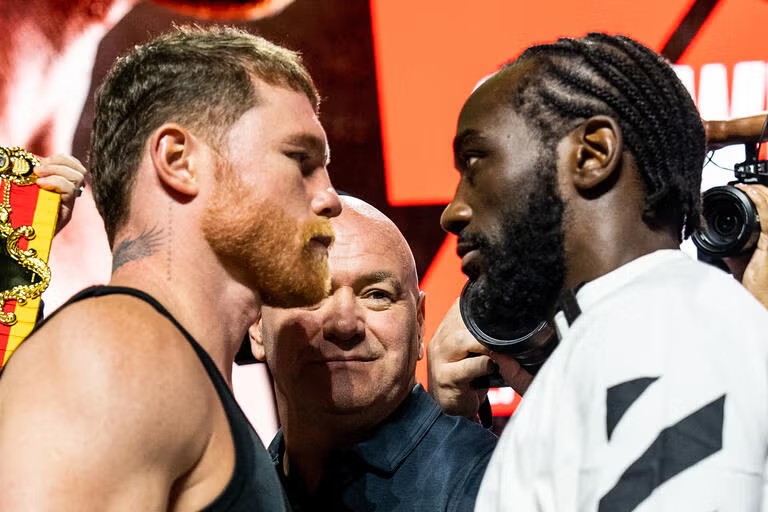
When fight figures cross into nine-digit guarantees, the conversation usually turns cynical—a spectacle of financial excess over pure sport. But inside a standard morning television segment, Saul "Canelo" Alvarez laid bare a far deeper, more ancient impulse in combat sports: the obsessive drive of an elite grandmaster demanding a second chance at the chessboard.
Sitting down on CBS Mornings, Canelo didn't flinch when presented with a hypothetical $75 million purse to step back into the squared circle with Terence "Bud" Crawford. Instead, he smiled, let out a soft laugh, and pushed the floor higher.
"They need a little bit more for me... We start with a 100 for you... But yes. Why not? As a fighter, we always want revenge."
For Canelo Alvarez, $100 million isn't merely leverage; it is the modern valuation of pride. Boxing history is built on champions who refuse to let an initial defeat define their legacy. When a legendary champion demands an astronomical purse for a second run, it signals two distinct realities:
• Moving between weight classes or facing a tactical technician of Crawford’s caliber carries immense career collateral. A nine-figure threshold reflects the monumental stakes of a second encounter.
• Great fighters are haunted not by defeat itself, but by uncorrected errors. Setting a massive price tag ensures that if the fight happens, it will be an event of historic proportion—a true global showcase.
The most revealing moment of the interview wasn't the dollar figure, but Canelo's rationale for why a sequel would unfold differently:
"If you look back, I always do good in my rematches... Because you get to adjust, you correct some of the mistakes. And I know what I did wrong."
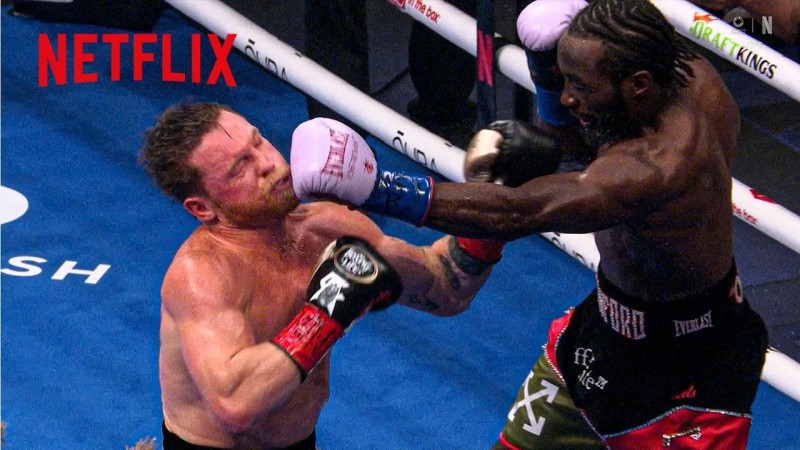
Elite counter-punchers and ring technicians treat a first fight as information gathering. In modern boxing history, supreme operators use 12 rounds of live data to map out an opponent's rhythm, footwork patterns, and timing habits.
Canelo's track record in multi-fight series underscores this philosophy. When given a second look at an opponent's subtle cues, his team historically makes surgical adjustments—closing distances faster, adjusting body positioning, and cutting off procedural escapes.
What makes the potential clash compelling is the mutual reverence between two generational operators. Even while retired or contemplating final mega-bouts, Crawford publicly acknowledged Canelo as the pound-for-pound standard and the face of the sport.
When the interview concluded with the phrase "Fight of the Century," it carried weight beyond hyperbole. In an era where fight promotion often relies on artificial rivalry, a clash of this magnitude rests purely on competitive excellence and astronomical economics.
If the financial structure falls into place, a rematch won't just be about settling a score—it will be a study in high-level recalibration under the brightest lights in sports.
But the road to a $100 million revenge match against Terence "Bud" Crawford doesn't start at the negotiating table—it runs straight through a high-stakes, high-volume roadblock in Saudi Arabia.
Before Canelo Alvarez can demand a nine-figure purse to recalibrate against Crawford, he must first reclaim his footing at super middleweight. That journey is set for Riyadh Season, where Canelo will face undefeated WBC Super Middleweight Champion Christian Mbilli on Oct. 31—a relentless pressure fighter known as the division's "punching machine."
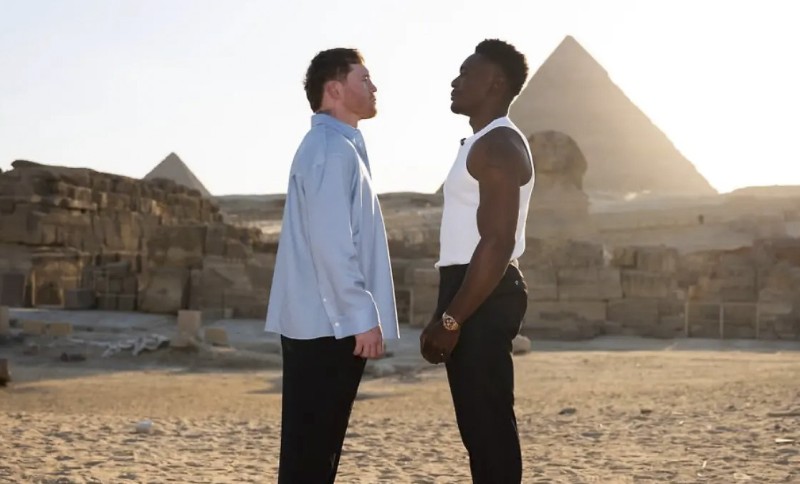
At the official launch press conference at the Grand Egyptian Museum in Cairo last May, the stakes for Canelo's return were laid out plainly. Coming off elbow surgery and the setback against Crawford, Canelo chose not a tune-up, but one of the most dangerous, high-volume power punchers in the division
"The last time Canelo went to Riyadh, he had his running shoes on... You don't have to chase Christian Mbilli. Christian Mbilli comes to find you, and Canelo is the type of guy who wants to be found."
— Rick Reeno, Ring Magazine CEO
Mbilli (29-0, 24 KOs) enters the ring with a style built on non-stop pressure, regularly throwing nearly 100 punches per round. For Canelo, facing an aggressive forward-marching opponent provides the exact platform he needs to demonstrate that his power, counter-punching precision, and elite ring IQ remain intact.
When asked why he selected a opponent with Mbilli's relentless style, Canelo made it clear that he thrives when the fight comes to him:
"He's a champion and he's a dangerous fighter. He throws a lot of punches, he's strong, and I like that kind of fight... I love it." — Canelo Alvarez
Mbilli, confident in his momentum and physical advantages, questioned whether Canelo's age and recent wear would prove decisive:
"In [October], you will regret being in that ring... You don't have the same age now, we will see." — Christian Mbilli
Canelo dismissed any notion that Mbilli poses a legitimate threat to his legacy, offering a blunt percentage assessment of the champion's chances:
"My mind is 0%... If I am 50 years old, you still cannot beat me. In this life, he cannot beat me. You are going to be surprised in [October]." — Canelo Alvarez
A victory over Mbilli does more than just add another world title belt to Canelo's collection—it recalibrates the narrative surrounding a potential Crawford rematch in three key ways.
• Reclaiming the WBC Super Middleweight title re-establishes Canelo as a reigning world champion at 168 lbs, giving him maximum leverage when negotiating the $100 million purse structure.
• Coming off elbow surgery, a dominant performance against a non-stop puncher like Mbilli proves Canelo's body can handle intense 12-round physical warfare.
• Beating an undefeated champion in a firefight sets up a clean dual-narrative: Crawford holding his ground as a pound-for-pound king, and a reignited Canelo riding high on championship momentum.
If Canelo dispatches Mbilli, the call for Crawford won't just be about money—it will be the ultimate champion-versus-champion collision.
Comments
Share your thoughts on the above article by Dong Secuya.